
Updated September 2026
Can you find jobs with summers off outside of teaching?
Established in 2019, Teacher Career Coach is a community sharing honest advice for teachers considering new careers. Featured in WSJ, NPR, and Yahoo News, 10k former teachers have used our resources to get new roles.

If you’re considering leaving teaching but you’re afraid of losing that months-long summer break, you’re not alone. “Am I going to regret losing my summers off?” is one of the most common questions I get.
Unlike a lot of career change questions, the answer here really varies from person to person. It depends on your circumstances, your career goals and your own level of burnout.
Will I miss my summers off?
While I was still teaching, I would have told you I freaking loved having spring break and summers off. I went on vacations and road trips with friends and posted cute “teachers gone wild” photos, celebrating what I had that other workers didn’t.
Looking back, I think I was feeding myself a narrative to cover up a concern that I’d made the wrong career choice. Even after weeks off, I was never truly myself. Weekends were filled with the Sunday scaries, and summer was filled with the summer scaries.

“Feeling great because you’re relieved from extreme discomfort and stress is not the same as just feeling great.”
That was my experience. It might not be yours, and you don’t have to feel as bad as I did to want a career change. But I want you to think about how you actually feel during your time off, and how often the days are bad versus good.
The trade-off: fewer weeks off, shorter weeks all year
Here’s something that’s easy to forget. Teachers get more weeks off, but the weeks they do work are much longer.
Teaching
~40 weeks
at 50–60 hours a week, packed with “a million little sprints” and work on nights and weekends
Most other jobs
~50 weeks
at about 40 hours a week, spread more evenly across the year, plus paid time off
How many hours teachers and former teachers work
Preliminary results from our 2026 Job Market Survey
Based on 55 current and 183 former teachers. Full results are released in October 2026.
And many teachers don’t actually take summers off. If you work a second job every summer to pay the bills, a career where one job replaces both incomes is a pretty obvious win.
I very rarely hear from former teachers who are more stressed in their new roles because of work expectations. Many companies work in “sprints,” short timeframes with one clear deliverable, instead of the million tiny sprints built into teaching: back-to-school night, conferences, grading, testing and evaluations, all on top of teaching all day.
Find a role that fits your life, not just your calendar
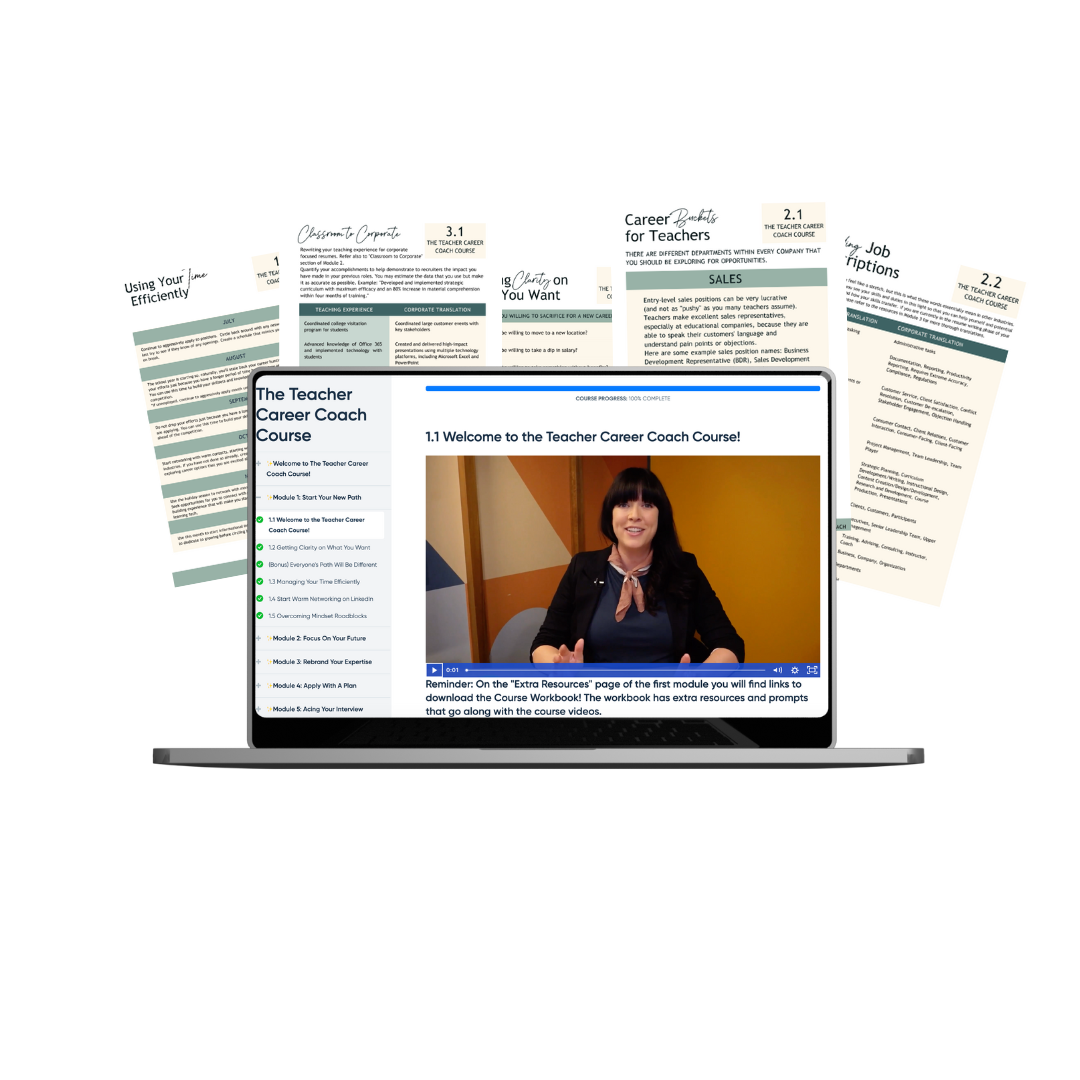
The Teacher Career Coach Course helps you figure out which careers fit your schedule and family needs, then walks you through your resume, networking and interviews. Starting at $39/month, with a 30-day money-back guarantee.
See what’s inside the course →Jobs with summers off (besides teaching)
Most roles that follow an academic calendar are still connected to education. Your teaching background gives you a head start in all of these.
Higher education
Colleges often scale back in summer. Look beyond professor roles: admissions, registrar, financial aid, student services, field experience coordinator and education department roles.
Virtual teaching
Online public schools, homeschool programs and virtual K-12 schools usually follow an academic year, often with paid prep time and office hours.
District and school roles
Instructional coach, TOSA, curriculum specialist, interventionist or district office roles usually follow the school calendar and can be stepping stones to roles outside the classroom.
Enrichment centers and other teaching settings
Enrichment centers, tutoring companies, hospital education programs and private instruction often follow the school year with smaller groups and less stress.
Contract curriculum or instructional design
Some contract and higher ed roles follow the academic year. Just know these fields are more competitive and more affected by AI than they used to be.
Freelancing
Virtual assistant, social media manager, content or copywriter. You set your own hours, which can include summers off, though it’s less stable than a full-time job.
One community member shared this about her new role: “A great place for former teachers to work and still get summers off is at an enrichment center! … It follows the same schedule as the school district I work for… The pay is very similar to my teacher salary with WAY LESS HOURS.”
Alternatives to summers off
Summers-off roles are limited and often pay hourly or only for contracted time. Before you rule out everything else, consider what many roles offer instead:
Flexible or unlimited PTO
Many companies offer flexible or unlimited paid time off to attract and keep good people. It’s a big change from stressing over a single sick day.
Remote and hybrid work
Remote and hybrid roles can let you be home when your kids are, and many don’t require a strict 9-to-5.
Shorter workweeks
Some companies offer four-day weeks or flexible schedules, which can add up to more time with family year-round.
Time off when it’s cheaper
You can travel when schools are in session, when it’s less crowded and less expensive.
The first time I used PTO outside the classroom, Jonathan and I hiked the Narrows in Utah right when students were going back to school. I was nervous to ask for the time. Then I watched coworkers take three-week paid vacations to Europe and realized the company meant it.
What if I have kids?
This is a real factor, and I don’t want to downplay it. When I asked former teachers who are parents how the change went, a few themes came up:
What parents told me
- Some paid for camp or daycare. Others saved money because they worked remotely instead of commuting.
- They gained flexibility during the week for doctor appointments, school pickups and soccer games, without the pressure they felt as teachers.
- They weren’t as frazzled. They were truly relaxed on weekends and holidays, and it improved their time with their kids year-round.
- Many felt relief from the guilt of spending all their energy on other people’s kids and having nothing left for their own.
“Having a mom who is overall happier, more energized and way less stressed is far more beneficial for her daughter than just having summers off.”
A former teacher, on why she left
Remote work with kids at home has limits, though. Only 10% of former teachers working remotely in our survey said they could work with their kids at home all the time. (More in remote jobs for teachers.)
If summers off is a non-negotiable for you
That’s okay too. Your options will be more limited, but I never want you to bend on something you’re 100% certain you need. Many teachers have a specific timeline, like a planned pregnancy or a young child at home, and want summers off for the next few years.
If that’s you, look at roles within your district, like instructional coach, for a change of pace and more leadership experience on your resume. Those roles can be stepping stones to higher-paying roles outside the classroom later.
And if you love your job more than you hate it, summers off really is a perk worth staying for. If you decide to stay, episode 30 with Angela Watson has great strategies for making teaching more sustainable.
Want to hear the full conversation? Listen to episode 71: Will I Miss My Summers Off?

Frequently asked questions about jobs with summers off
What jobs have summers off besides teaching?
Common options include higher education roles (admissions, student services, advising), virtual teaching, district roles like instructional coach or interventionist, enrichment centers and tutoring companies, some contract curriculum work, and freelancing.
What jobs follow a school schedule?
Most jobs that follow a school calendar are in education: district and school support roles, virtual schools, higher education, enrichment centers and some education companies that hire seasonally.
Are there remote jobs with summers off?
A few. Virtual teaching and some contract or freelance work can be remote and follow an academic year. Most full-time remote roles don’t include summers off, but many offer flexible PTO.
Will I miss having summers off if I leave teaching?
It depends on your level of burnout and your family’s needs. Many former teachers say shorter workweeks, flexible PTO and less stress outweigh losing summers off. In our preliminary 2026 survey, 177 of 183 former teachers work under 50 hours a week.
Do corporate jobs have unlimited PTO?
Some do. Many companies now offer flexible or unlimited paid time off. Check a company’s careers page and employee reviews on sites like Glassdoor to see how it works in practice.
There isn’t a one-size-fits-all answer here. Whatever you decide, I’m rooting for you.
Find a role that fits your life
The Teacher Career Coach Course helps you find a role that fits your life and your schedule, then walks you through translating your resume, networking and interviewing.